Seasonal hub
Halloween Tattoos: Ideas, Meanings, Flash & Stencils
Quick answer: Halloween tattoos are spooky, cute or scary designs inspired by October 31: ghosts, jack-o'-lanterns, bats, black cats, witches, skulls and spiders. Most are small flash pieces (1–3 inches) tattooed at Halloween and Friday the 13th flash events, but they also anchor larger horror sleeves.
- Peak season
- September–October
- Most searched
- Cute ghosts, pumpkins, bats, black cats
- Typical size
- 1–3 in (flash)
- Typical price
- $80–$200 (US flash)
When is Halloween?
Halloween is on October 31 every year. In 2026 it falls on a Saturday, so most tattoo shops run their Halloween flash events over the last weekend of October.
Halloween is coming.
| Year | Date |
|---|---|
| 2026 | Saturday, October 31 |
| 2027 | Sunday, October 31 |
| 2028 | Tuesday, October 31 |
| 2029 | Wednesday, October 31 |
| 2030 | Thursday, October 31 |
Shops usually announce Halloween flash from mid-September; see how to find Halloween tattoo specials near you.
Halloween tattoo ideas by theme
 Spooky Tattoosspooky tattoos
 Cute Halloween Tattooscute halloween tattoos
 Cute Ghost Tattooscute ghost tattoo
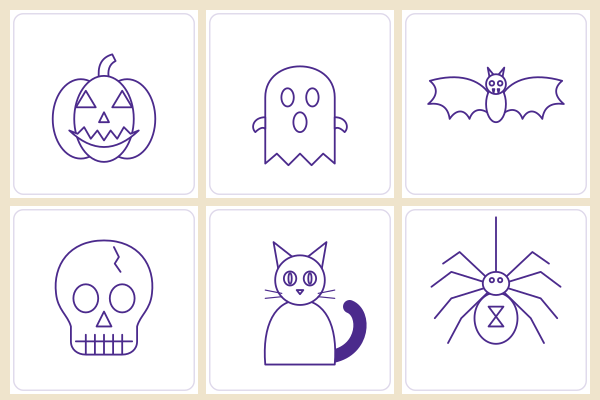 Halloween Tattoo Stencils & Outlines (Free Printables)halloween tattoo stencils
 Halloween Tattoo Sleeveshalloween tattoo sleeve
 Halloween Tattoos for Menhalloween tattoos for men
 Feminine Halloween Tattoosfeminine halloween tattoos
 Vintage Halloween Tattoosvintage halloween tattoos
 Traditional Halloween Tattoos (American Traditional Flash)traditional halloween tattoos
 Halloween Hand Tattooshalloween hand tattoos
Halloween flash and stencils
Build a printable sheet from 30 original designs in the Halloween flash gallery, or download free Halloween tattoo stencils.
Classic Halloween tattoo motifs
What is Halloween?
Halloween is a holiday celebrated every year on October 31, the evening before the Christian feast of All Saints' Day on November 1. Its name is a contraction of All Hallows' Eve, where 'hallow' is an old word for a saint. Modern Halloween mixes Celtic harvest traditions, Christian remembrance of the dead and American popular culture: costumes, trick-or-treating, carved pumpkins and haunted attractions.
For tattoo collectors, Halloween is also a season. Spooky imagery peaks from September through October, shops release Halloween flash and many people time a first spooky tattoo to land before October 31.
Where Halloween comes from
Halloween grew from three traditions layered over roughly two thousand years.
Samhain: the Celtic end of harvest
Samhain was a Gaelic festival marking the end of the harvest and the start of the dark half of the year, around November 1. People believed the boundary between the living and the dead grew thin, lit bonfires and wore disguises to confuse wandering spirits. That idea of a night when spirits walk is the root of Halloween's ghosts, skulls and spirit-board imagery.
All Hallows' Eve: the Christian layer
In the 8th century the Western Church placed All Saints' Day (All Hallows) on November 1, followed by All Souls' Day on November 2. The evening before became All Hallows' Eve, later shortened to Halloween. Remembrance of the dead, candles and church bells joined the older customs.
America: costumes, candy and pumpkins
Irish and Scottish immigrants brought Halloween customs to the United States in the 19th century, swapping carved turnips for native pumpkins. Trick-or-treating spread in the mid-20th century, and Halloween became the costume, candy and horror-movie holiday that shapes today's spooky tattoo flash. For a fuller history, see Encyclopaedia Britannica's Halloween entry.
Halloween symbols and what they mean as tattoos
Most Halloween tattoo motifs carry meanings much older than the holiday itself. Each symbol below links to its full meaning, history and placement guide.
| Symbol | Where it comes from | Meaning as a tattoo |
|---|---|---|
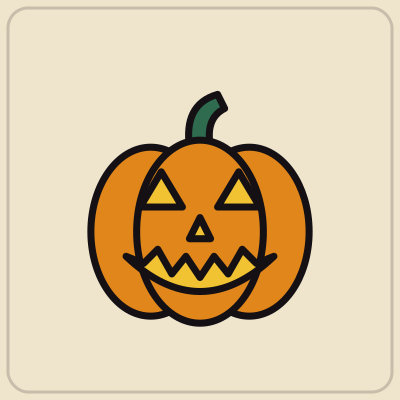
| Jack-o'-lantern | Irish and Scottish turnip lanterns and the legend of Stingy Jack; pumpkins replaced turnips in America. | Protection from spirits, harvest and a love of Halloween itself. |
| Ghost | Samhain's belief that the dead walk on this night; the white-sheet ghost comes from burial shrouds. | Memory of loved ones, playful spookiness or a quiet, introverted personality. |
| Black cat | Medieval European superstition linking black cats to witches as familiars. | Independence, magic and luck (bad in the US, good in the UK and Japan). |
| Witch hat | 17th- and 18th-century woodcuts and later The Wizard of Oz (1939). | Feminine power, independence and craft. |
| Bat | Popular accounts link bats to the insects swarming around Samhain bonfires; Dracula later tied them to vampires. | Intuition, rebirth and navigating darkness. |
| Skull and skeleton | Medieval danse macabre art and All Souls' remembrance of the dead. | Mortality, memento mori and fearlessness. |
| Spider and web | Old houses and graveyards draped in webs became a shorthand for haunted places. | Fate, patience, creativity and danger. |
| Candle | Candles lit for souls on All Hallows' Eve and All Souls' Day. | Hope in darkness, remembrance and the passing of time. |
| Crescent moon | The night-time setting of every Halloween story and witchcraft imagery. | Change, intuition and new beginnings. |
| Grim reaper | The personification of death from 14th-century plague-era art. | Inevitability, survival and acceptance of death. |
Halloween, All Saints' Day and Día de los Muertos
Halloween, All Saints' Day, All Souls' Day and Día de los Muertos fall within three days of each other, so their imagery often gets mixed. Halloween is spooky and playful; Día de los Muertos is a joyful remembrance of family; All Saints' and All Souls' Days are religious observances. Keeping the moods distinct in a design shows respect for each tradition.
| Holiday | Date | Origin | Mood | Typical tattoo imagery |
|---|---|---|---|---|
| Halloween | October 31 | Celtic Samhain and Christian All Hallows' Eve | Spooky, playful, scary | Pumpkins, ghosts, bats, witches, black cats |
| All Saints' Day | November 1 | Christian feast honoring all saints | Reverent remembrance | Candles, crosses, halos |
| Día de los Muertos | November 1–2 | Indigenous Mexican traditions blended with Catholic All Saints and All Souls | Joyful remembrance of family | Calaveras, La Catrina, marigolds, candles |
| All Souls' Day | November 2 | Christian day of prayer for the dead | Mourning and prayer | Candles, skulls, memento mori |
Read our guide to Día de los Muertos tattoos before choosing a calavera design.
The spooky-season tattoo calendar
Spooky tattoo demand follows a yearly rhythm. Halloween flash peaks in late October, and Friday the 13th events add extra dates through the year; the next is November 13, 2026, and October 13, 2028 lands right before Halloween.
| When | What happens |
|---|---|
| Mid-September | Shops start posting Halloween flash and event dates |
| September–October | Peak search interest in spooky tattoos and tattoo conventions |
| Last weekend of October | Most Halloween flash days |
| October 31 | Halloween |
| November 1–2 | All Saints' Day, Día de los Muertos and All Souls' Day |
| November 13, 2026 | Friday the 13th: traditional flash-day date |
| August 13, 2027 | Friday the 13th: traditional flash-day date |
| October 13, 2028 | Friday the 13th: traditional flash-day date |
Darker than Halloween
Want something that isn't tied to one night a year? These dark themes work year-round:
Plan your Halloween tattoo
Halloween and Halloween tattoo FAQ
What are the most popular Halloween tattoos?
The most popular Halloween tattoos are cute sheet ghosts, jack-o'-lanterns, bats, black cats, skulls, spiders and witch hats, which lead US searches every October. Skeleton hands, Medusa and memento mori designs follow. Most are small flash pieces of 1–3 inches, tattooed on the wrist, ankle, forearm or hand.
What is a Halloween flash day?
A Halloween flash day is a shop event where artists tattoo pre-drawn spooky designs at fixed, usually discounted prices, mostly first come, first served. Events cluster around Halloween and Friday the 13th. Arrive early, bring ID and cash, and pick two backup designs in case your first choice is taken.
What is a good small Halloween tattoo?
A good small Halloween tattoo is a simple silhouette: a ghost (from about 0.8 inch), a crescent moon, a bat, a coffin or a black cat. These shapes stay readable at 2 inches or less because they rely on a bold outline and solid fill rather than fine detail, which blurs at small sizes.
Do Halloween tattoos have to be scary?
No, Halloween tattoos range from cute to genuinely frightening. Cute and spooky designs use ghosts, pumpkins and black cats; gothic designs use black roses, moths and candles; scary designs use reapers, werewolves and realistic skulls. Pick the mood first, then the motif and style that match it.
How much does a Halloween tattoo cost?
A Halloween tattoo in the US typically costs $80–$200 for small flash, $200–$600 for a medium custom piece, and roughly $120–$250 per hour for larger work. Size, detail, color, placement and the artist's demand all change the price. Budget a 15–25% tip on top.
When is Halloween?
Halloween is on October 31 every year, the evening before All Saints' Day on November 1. The date never changes, but the weekday does, so shops often schedule Halloween flash events on the closest weekend. Most US tattoo shops announce their Halloween specials from mid-September onward.
Why do we celebrate Halloween?
Halloween is celebrated as the eve of All Saints' Day and as a continuation of Samhain, the Celtic festival marking the end of harvest, when the dead were believed to walk among the living. Today it is mainly a cultural celebration of costumes, candy, horror and, for tattoo fans, spooky flash.
What does the word Halloween mean?
Halloween means 'the evening of All Hallows', from All Hallows' Eve. 'Hallow' is an old English word for a saint, and All Hallows is another name for All Saints' Day on November 1. Over centuries 'All Hallows' Even' was shortened to Hallowe'en and then Halloween.