Dark tattoo ideas
Illustrative, Abstract and Ornamental Blackwork Tattoos
Quick answer: Illustrative blackwork draws scenes with fine hatching like an etching, abstract blackwork uses loose brushstroke shapes, and dark ornamental blackwork builds mandalas, lace and filigree patterns. All three use black ink only, need 4 inches or more for detail, and suit the forearm, sleeve, sternum and back.
- Typical size
- 4–10 in
- Ink
- Black only
- Styles
- Illustrative, abstract, ornamental, blackout
- Designs on this page
- 10
Four kinds of artistic blackwork
| Style | Technique | Typical subjects | Size |
|---|---|---|---|
| Illustrative | Fine hatching and crosshatching, like an engraving or woodcut | Ravens, moths, anatomical skulls, gothic scenes | 4–10 in |
| Abstract / brush | Loose brushstrokes, splashes and gestural marks | Paired with a sharp subject, or on their own across a limb | 5–20 in |
| Dark ornamental | Mandalas, lace, filigree and jewelry patterns shaded with dots | Sternum pieces, hand and neck ornaments, frames | 3–12 in |
| Heavy / blackout | Large areas packed with solid black | Cover-ups, sleeve backgrounds, bold graphic work | Whole areas |
These styles are often combined: an illustrative raven inside an ornamental frame, or a realistic skull floating on abstract brushstrokes. For the basics of black-only tattooing, start with the blackwork style guide.
Illustrative blackwork tattoo: design gallery
Real illustrative and ornamental blackwork
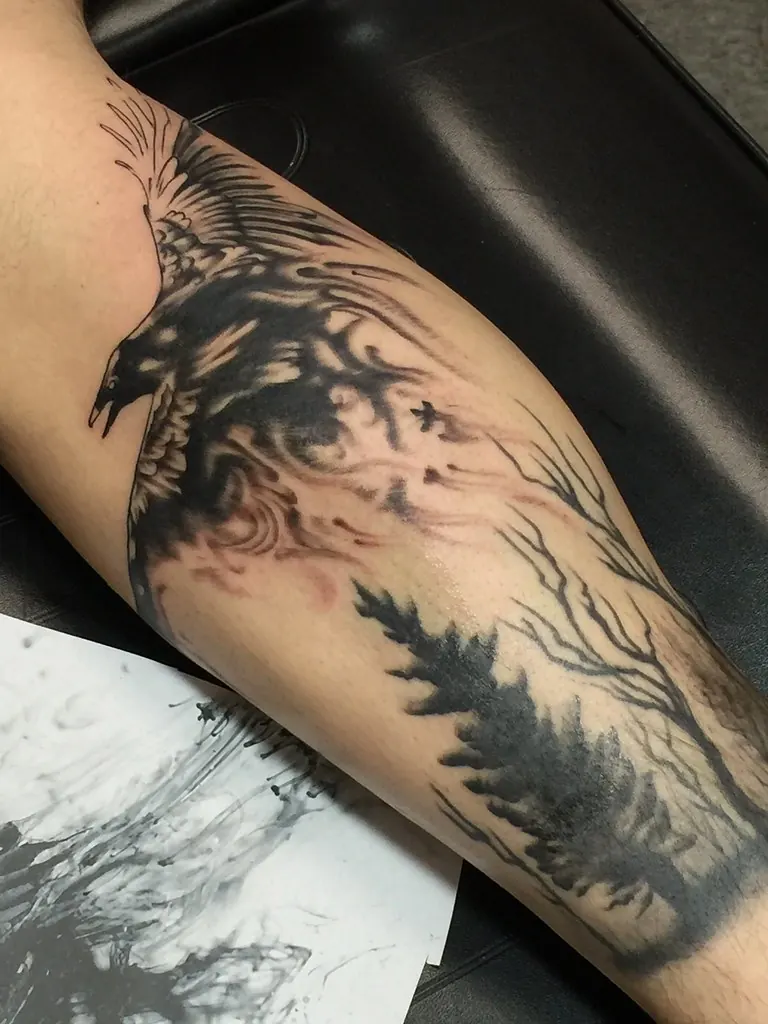
Real artistic blackwork: a raven over a forest, a wolf in a geometric frame, a moth in a dotwork mandala and a geometric skull piece.
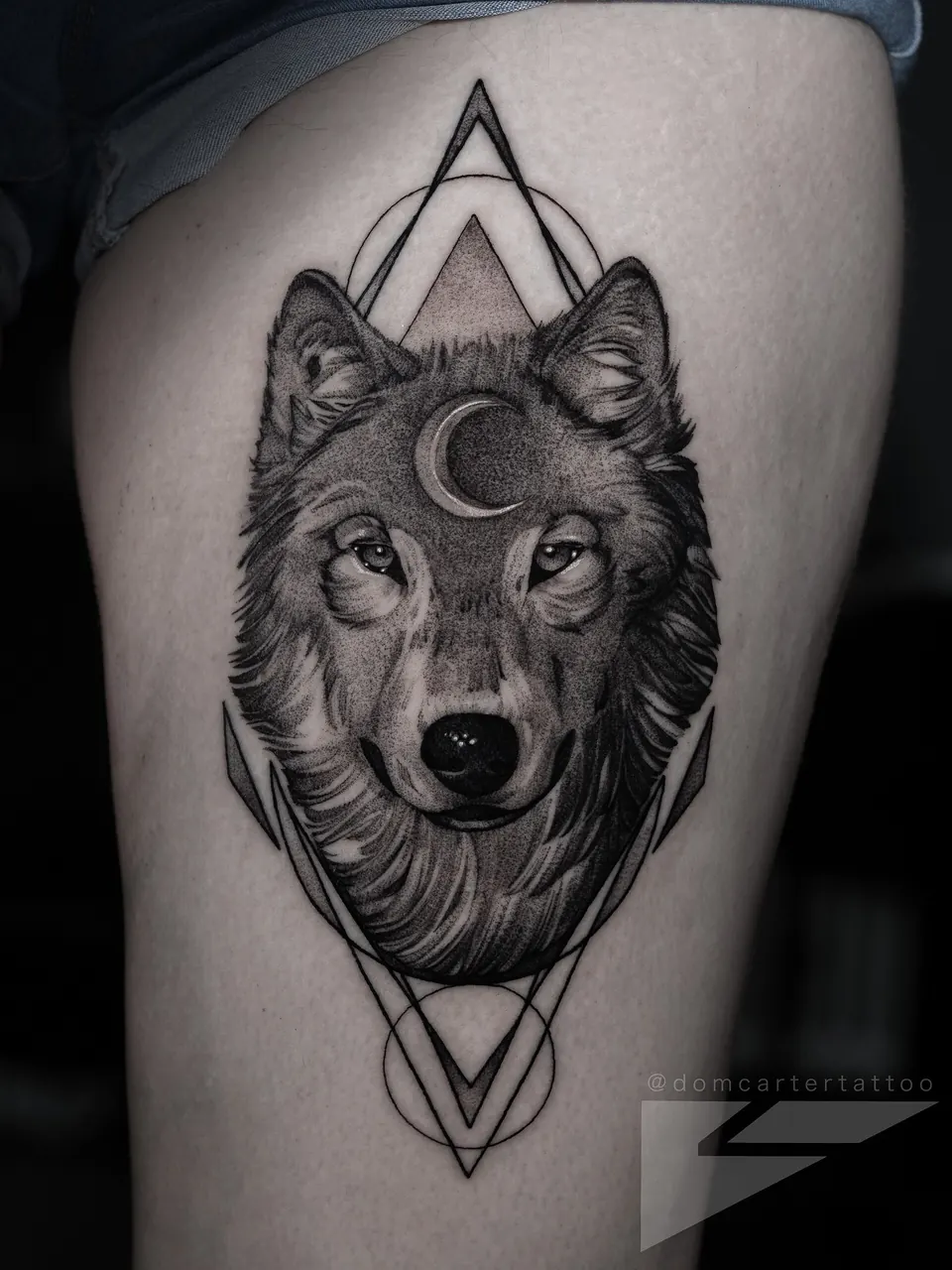
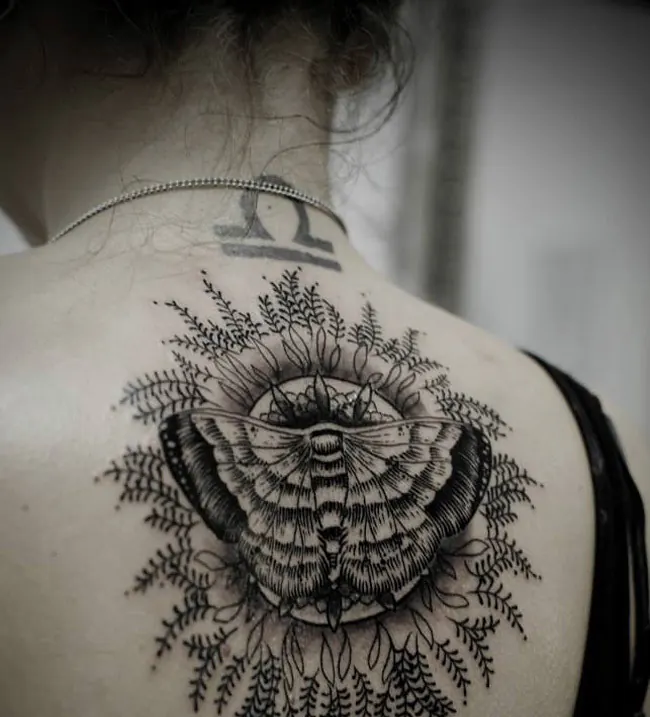
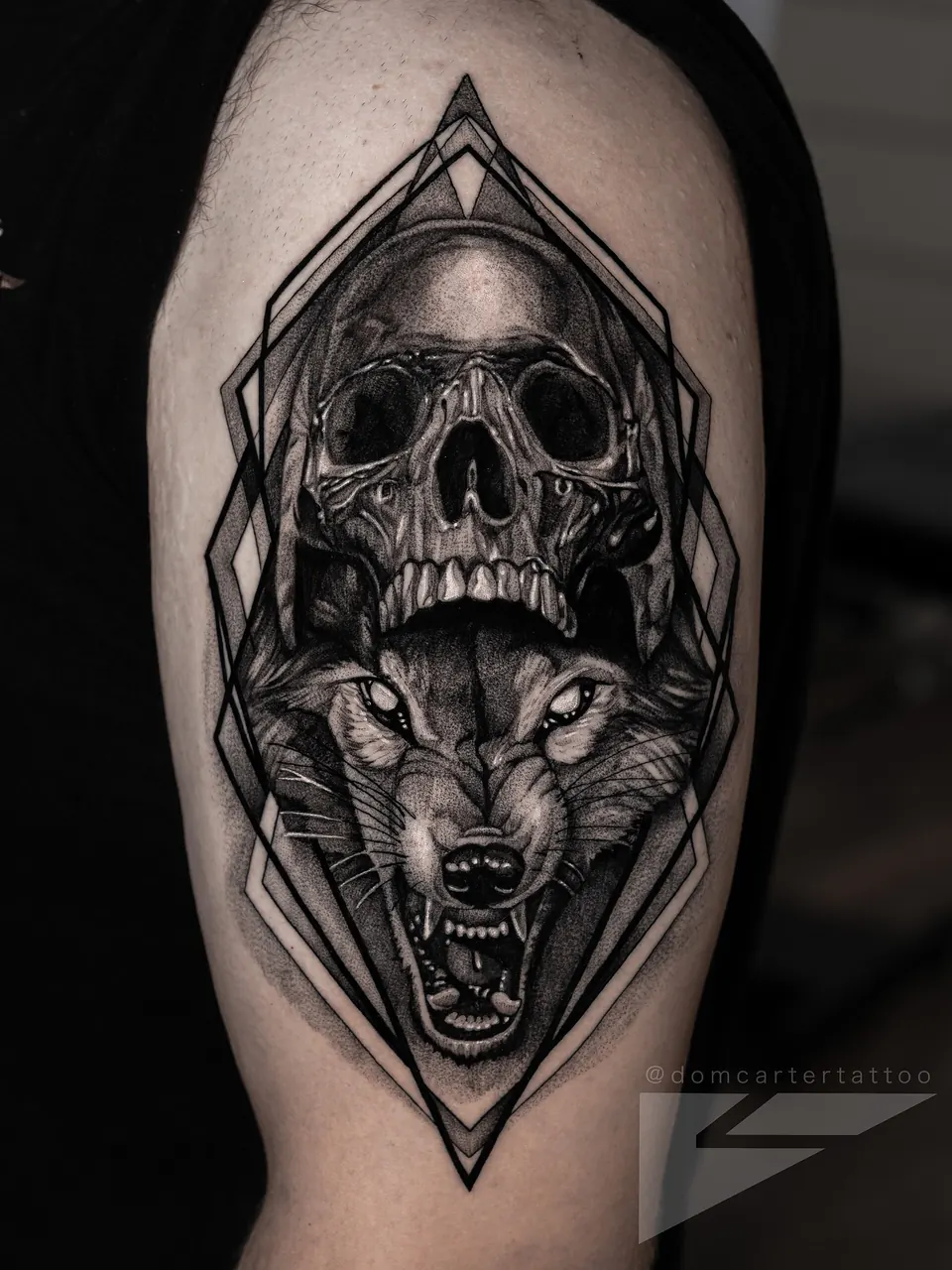
Photos are shared under open licenses (Creative Commons or public domain) and credited to their authors. Tattoo artists are named where known.
Illustrative blackwork
Illustrative blackwork borrows from 16th–19th-century book illustration. Shadows are built from parallel lines (hatching) and crossed lines (crosshatching), so the tattoo looks printed rather than painted. It suits gothic and dark subjects especially well:
1. Engraved raven on a branch
Every feather drawn in fine lines.
Size: 4–6 in · Style: Sketch · Meaning
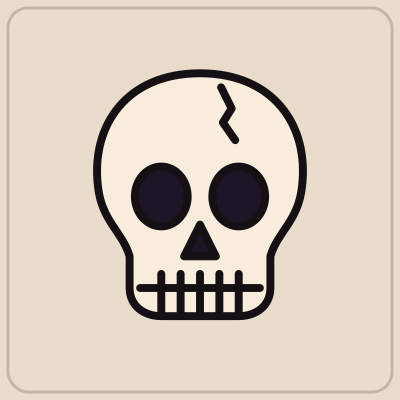
2. Anatomical skull
Hatched like an old medical textbook.
Size: 4–6 in · Style: Neo-traditional · Meaning
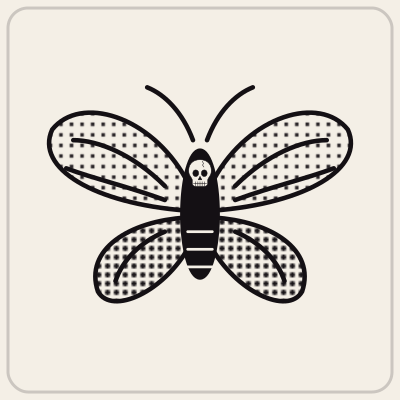
3. Death's-head moth plate
A natural-history illustration with a gothic edge.
Size: 4–6 in · Style: Dotwork · Meaning
Abstract blackwork
Abstract blackwork uses bold, loose marks: brushstrokes, ink splashes, smudges and geometric fragments. Abstract work reads from a distance and flows with the muscles of the arm, leg or back. Many artists pair it with one sharp element so the eye has a focal point.
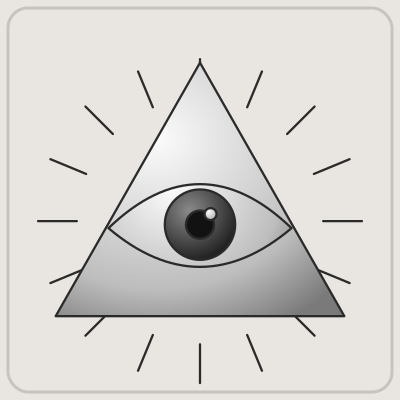
6. Brushstroke behind a realistic eye
Soft realism against raw marks.
Size: 5–8 in · Style: Black and grey realism · Meaning
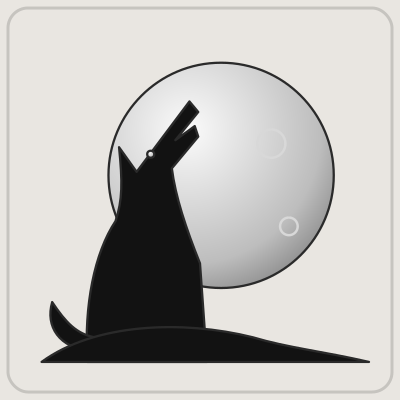
7. Black splash wolf
The head emerging from ink splatter.
Size: 6–9 in · Style: Black and grey realism · Meaning
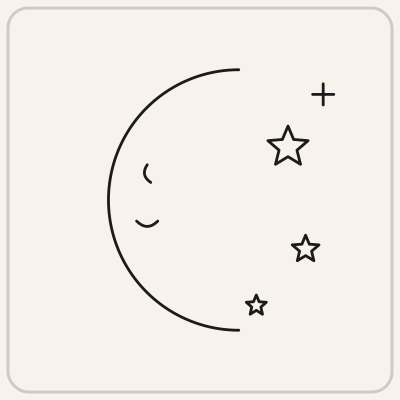
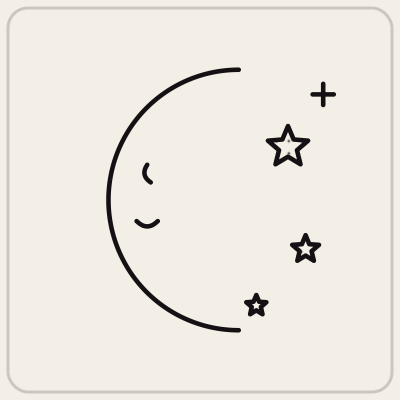
8. Abstract crescent moon
One brushstroke curve with a few dots.
Size: 3–5 in · Style: Fine line · Meaning
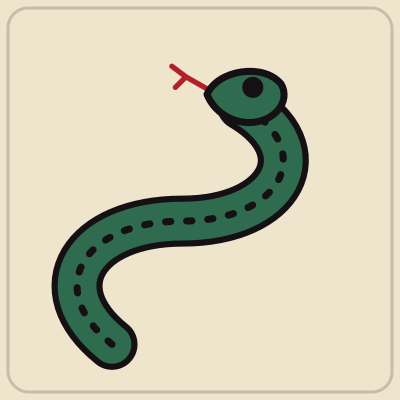
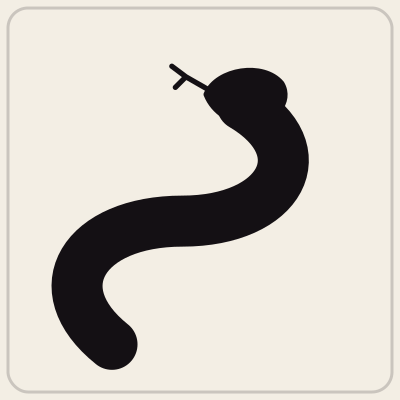
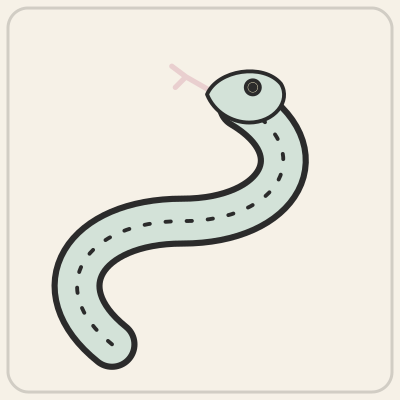
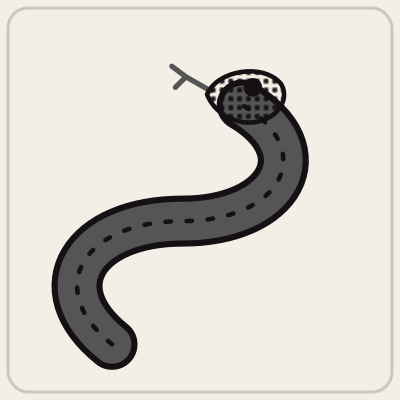
9. Serpent made of strokes
A snake suggested by a single winding mark.
Size: 6–10 in · Style: American traditional · Meaning
Dark ornamental blackwork
Dark ornamental tattoos treat the body like jewelry: mandalas, lace bands, chandelier drops, filigree frames and patterns that follow the body's symmetry. They are usually shaded with dotwork and anchored by solid black.
11. Ornamental hand piece
Lace from the wrist to the knuckles.
Size: 3–5 in · Style: Dotwork · Meaning
12. Neck ornament
A choker or pendant shape around the throat.
Size: 3–5 in · Style: Dotwork · Meaning
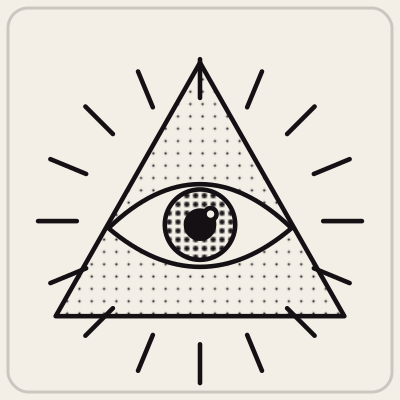
13. Ornamental frame around an eye
An all-seeing eye in filigree.
Size: 3–5 in · Style: Dotwork · Meaning
14. Ornamental forearm band
A repeating pattern around the arm.
Size: 2–4 in wide · Style: Dotwork · Meaning
Heavy blackwork and blackout tattoos
Heavy blackwork covers large areas with solid black. A full blackout fills an entire area, such as a forearm or a whole sleeve. People get blackout tattoos for three main reasons:
- Covering old tattoos. Solid black hides almost any earlier ink when other cover-up options fail.
- A bold graphic look. Large black shapes against bare skin make a striking contrast.
- A base for new work. Some collectors add white or colored designs on top of healed black.
Blackout is demanding: large fills usually take several sessions, healing involves more swelling and oozing than linework, and laser removal of dense black takes many sessions. Choose an artist whose healed fills are even and fully packed.
Best placements
| Placement | Pain | Best style |
|---|---|---|
| Forearm | 3/10 | Illustrative scenes, ornamental bands |
| Upper arm | 3/10 | Abstract brushwork, illustrative creatures |
| Sternum | 8/10 | Ornamental mandalas and lace |
| Hand | 7/10 | Ornamental lace, small heavy black shapes |
| Thigh | 4/10 | Large illustrative or abstract pieces |
| Back and spine | 8/10 | Ornamental columns, large abstract work |
Illustrative blackwork tattoo by placement
| Design | Size | Pain | Fade risk |
|---|---|---|---|
| Raven on the hand | 2.5–4.5 in | 7/10 | High |
| Raven on the neck | 2.5–5 in | 7/10 | Medium |
| Death's-Head Moth on the chest | 4–9 in | 6/10 | Low |
| Death's-Head Moth on the sternum | 3–7 in | 8/10 | Low |
| Skull on the wrist | 1.5–2.5 in | 6/10 | Medium |
| Skull on the hand | 2.5–4.5 in | 7/10 | High |
| Serpent on the forearm | 3–7 in | 3/10 | Low |
| Serpent on the ribs | 4–10 in | 8/10 | Low |
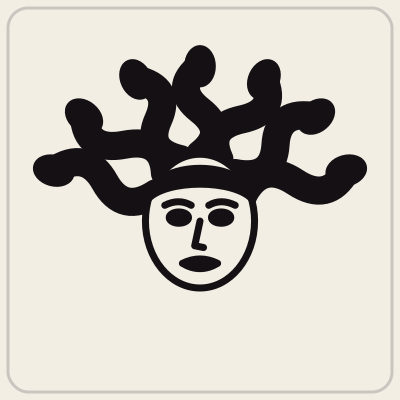
| Medusa on the upper arm | 3.5–6 in | 3/10 | Low |
| Medusa on the shoulder | 3.5–6 in | 4/10 | Low |
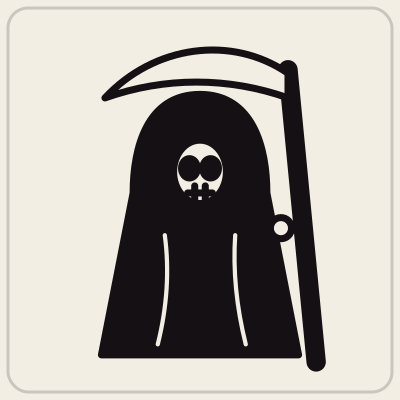
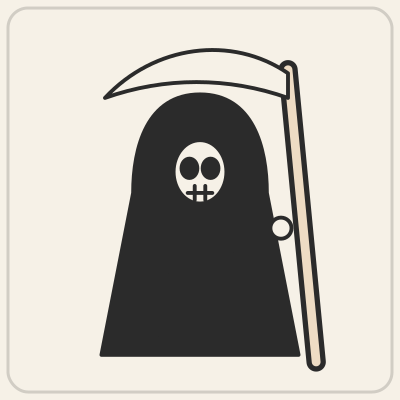
| Grim Reaper on the forearm | 3.5–7 in | 3/10 | Low |
| Grim Reaper on the thigh | 4–9 in | 4/10 | Low |
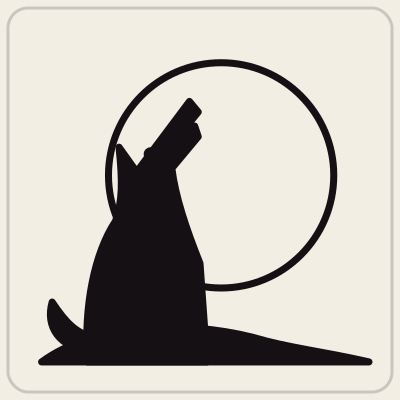
| Werewolf on the upper arm | 3–6 in | 3/10 | Low |
| Werewolf on the shoulder | 3–6 in | 4/10 | Low |
| Haunted House on the upper arm | 3.5–6 in | 3/10 | Low |
| Haunted House on the shoulder | 3.5–6 in | 4/10 | Low |
| All-Seeing Eye on the upper arm | 3–6 in | 3/10 | Low |
| All-Seeing Eye on the shoulder | 3–6 in | 4/10 | Low |
| Crescent Moon behind the ear | 0.6–1.5 in | 5/10 | Low |
| Crescent Moon on the finger | 0.6–1.2 in | 6/10 | Very high |
Frequently asked questions
What is illustrative blackwork?
Illustrative blackwork is a black-only tattoo style that builds shadows from fine hatching and crosshatching, so the tattoo looks like an engraving or woodcut. The style suits ravens, moths, anatomical skulls and gothic scenes, usually at 4–10 inches.
What is an abstract blackwork tattoo?
An abstract blackwork tattoo uses loose black brushstrokes, splashes and geometric fragments instead of a clear subject. Abstract pieces follow the body's muscles and are often paired with one sharp element, such as a realistic eye or a wolf head, as a focal point.
What is a dark ornamental tattoo?
A dark ornamental tattoo is a black-ink pattern that decorates the body like jewelry: mandalas, lace, filigree and chandelier drops, usually shaded with dotwork. Popular spots are the sternum, hands, neck and forearm.
Why do people get blackout tattoos?
People get blackout tattoos to cover old tattoos, to create a bold graphic look, or to make a black base for later white or colored designs. Blackout takes several sessions, heals with more swelling than linework, and is very hard to remove later.
Is heavy blackwork painful?
Heavy blackwork usually hurts more than linework on the same spot, because solid fills need many passes over the skin. Placement still matters most: the forearm and upper arm rate about 3/10, while the sternum, ribs and spine rate about 8/10.