Tattoo style
American Traditional Tattoos: Dark & Halloween Designs
Quick answer: American traditional tattoos use bold black outlines, a limited palette of red, yellow, green and black, and simple iconic imagery. The style is among the best-aging, because thick outlines hold the ink in place for decades. It is the backbone of Halloween flash and reads clearly from across a room.
- Line work
- Bold, consistent black outline (often a 9–14 round liner)
- Palette
- Red, yellow, green, black and skin tone
- Shading
- Solid black shading and whip shading
- How it ages
- Excellent: one of the best-aging styles
- Relative time
- 1× a traditional piece

What is american traditional?
Also called 'old school' or 'Sailor Jerry style', American traditional is built to last: thick outlines hold the ink in place for decades, and solid color packing keeps the image readable from across a room. It was among the higher-volume rising styles in US searches in October 2026.
History
The style crystallized in the early 20th century with artists such as Norman 'Sailor Jerry' Collins and Bert Grimm, drawing on sailors' and circus flash. Pre-drawn flash sheets on shop walls are its signature.
Dark motifs in american traditional
30 motifs suit this style. Each links to a design guide.
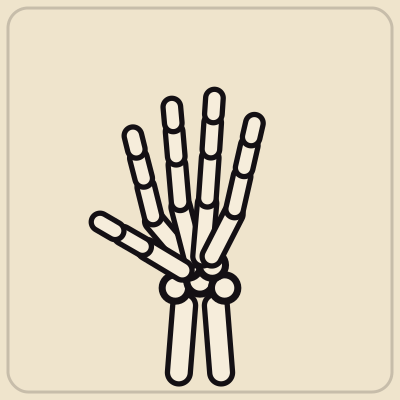 American Traditional Skeleton HandAmerican Traditional Skull
 American Traditional Sugar Skull
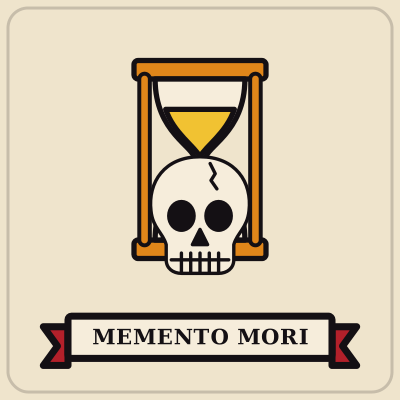 American Traditional Memento Mori
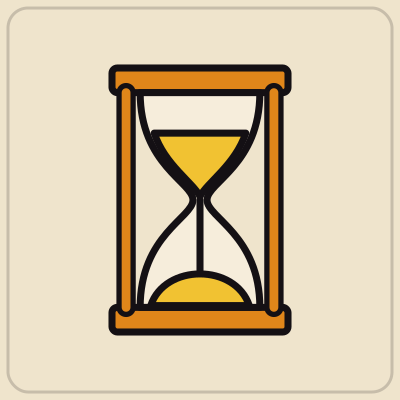 American Traditional Hourglass
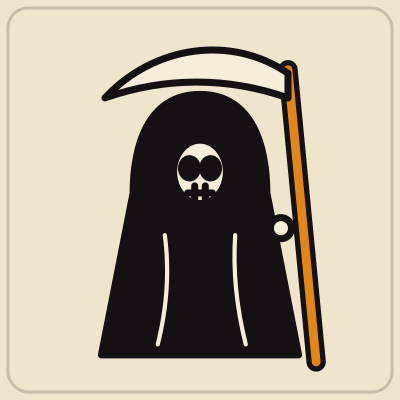 American Traditional Grim Reaper
 American Traditional Coffin
 American Traditional Black Rose
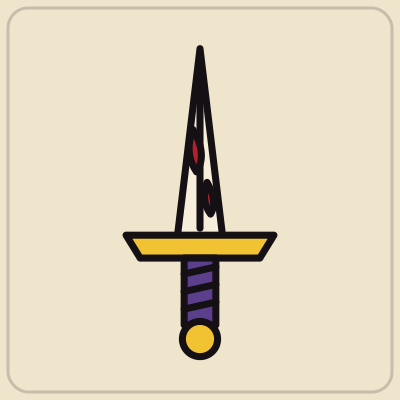 American Traditional Dagger
 American Traditional Candle
 American Traditional Death's-Head Moth
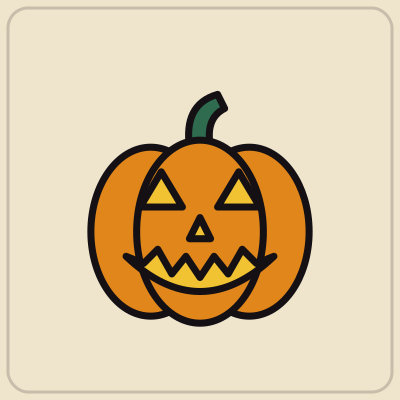 American Traditional Jack-o'-Lantern
 American Traditional Ghost
 American Traditional Black Cat
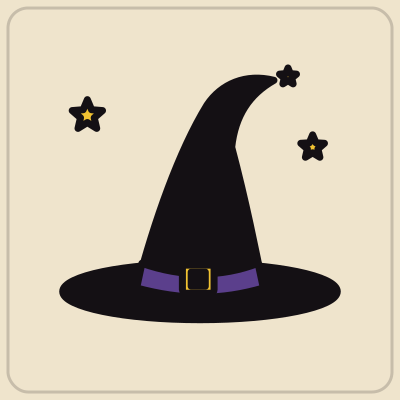 American Traditional Witch Hat
 American Traditional Haunted House
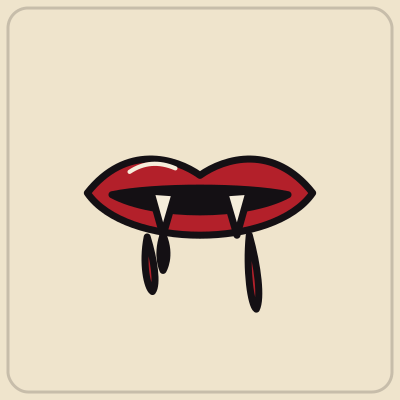 American Traditional Vampire
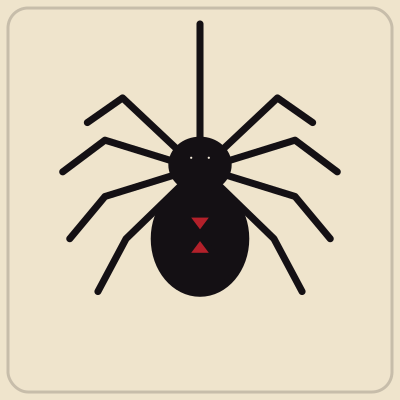 American Traditional Spider
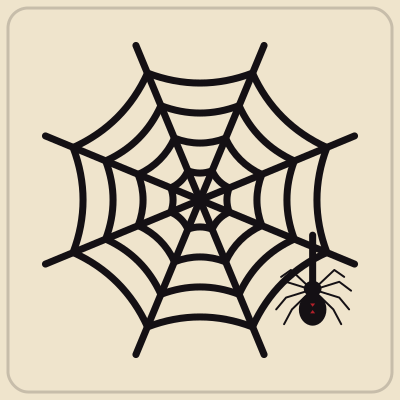 American Traditional Spider Web
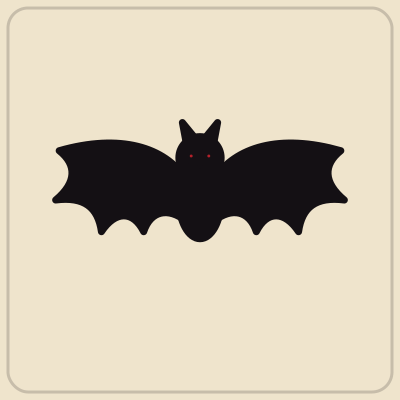 American Traditional Bat
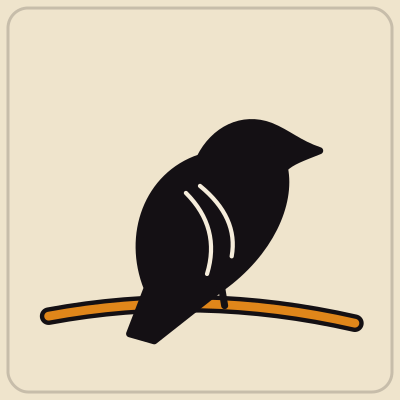 American Traditional Raven
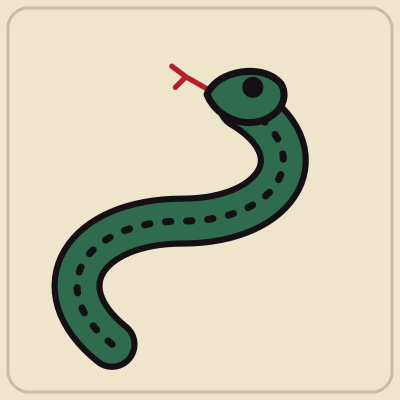 American Traditional Serpent
 American Traditional Medusa
 American Traditional Werewolf
 American Traditional Ouroboros
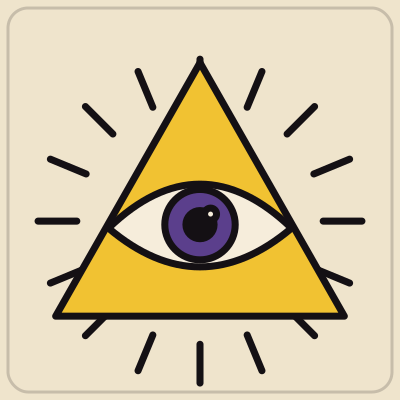 American Traditional All-Seeing Eye
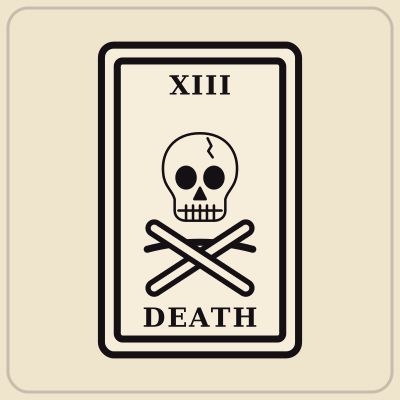 American Traditional Death Tarot Card
 American Traditional Crystal Ball
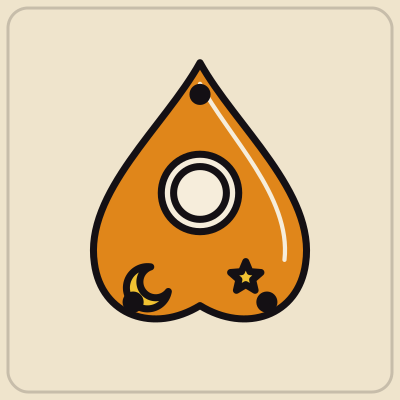 American Traditional Spirit Board Planchette
 American Traditional Crescent Moon
Placement advice
American Traditional needs roughly 1× the minimum size of a traditional version of the same motif.
Finding the right artist
Look for clean, consistent line work and a portfolio of healed (not just fresh) pieces. Many traditional artists sell flash, so pick from the wall on a flash day.
Key takeaways for american traditional tattoos
- Look: Bold, consistent black outline (often a 9–14 round liner); red, yellow, green, black and skin tone; solid black shading and whip shading.
- Aging: Excellent: one of the best-aging styles.
- Size: about 1× the minimum size of a traditional version of the same motif.
- Session time: about 1× a traditional piece of the same size.
Compare styles
| Style | Line | Palette | Aging |
|---|---|---|---|
| American Traditional | Bold, consistent black outline (often a 9–14 round liner) | Red, yellow, green, black and skin tone | Excellent: one of the best-aging styles |
| Neo-Traditional | Bold outline with varied line weights | Jewel tones: burgundy, teal, violet, ochre | Very good |
| Blackwork | Bold outline and solid fills | Black only | Excellent: black is the most stable pigment |
| Fine Line | Single needle or 3RL thin lines | Mostly black, sometimes soft color washes | Fair: lines can soften and blur over the years |
| Black & Grey Realism | Minimal outlines; form defined by shading | Black and grey washes | Good when large; small realism blurs |
| Dotwork | Fine-to-medium outline | Black, sometimes with red accents | Good: dots soften slightly but texture remains |
| Sketch | Loose, multiple overlapping lines | Black with light color washes | Fair: loose lines can blur if too small |
| Ignorant Style | Uneven, hand-drawn lines | Mostly black | Fair to good: simple lines hold if not too thin |
| Trash Polka | Bold outlines mixed with realism | Black and red only | Good: black and red are strong pigments |
| Minimalist | Thin to medium simple lines | Black, sometimes one accent color | Good if lines are not too thin |
Frequently asked questions
Why do American traditional tattoos age so well?
American traditional tattoos age so well because bold outlines and saturated color resist the natural spreading of ink under the skin. Thick lines, often made with a 9–14 round liner, keep shapes crisp for decades. Solid black shading and packed color also keep the image readable from across a room.
Is American traditional the same as Sailor Jerry?
No, they are not quite the same. Norman 'Sailor Jerry' Collins is one of the style's most famous pioneers, and his flash is a subset of American traditional. The broader style also includes work by artists like Bert Grimm and draws on early 20th-century sailor and circus flash.
Can American traditional be small?
Yes, American traditional tattoos can be small, but the design must stay simple because the bold lines need room. A single skull, bat or rose works at a small size better than a busy scene. Ask your artist for the smallest size at which the outline and color still read clearly.